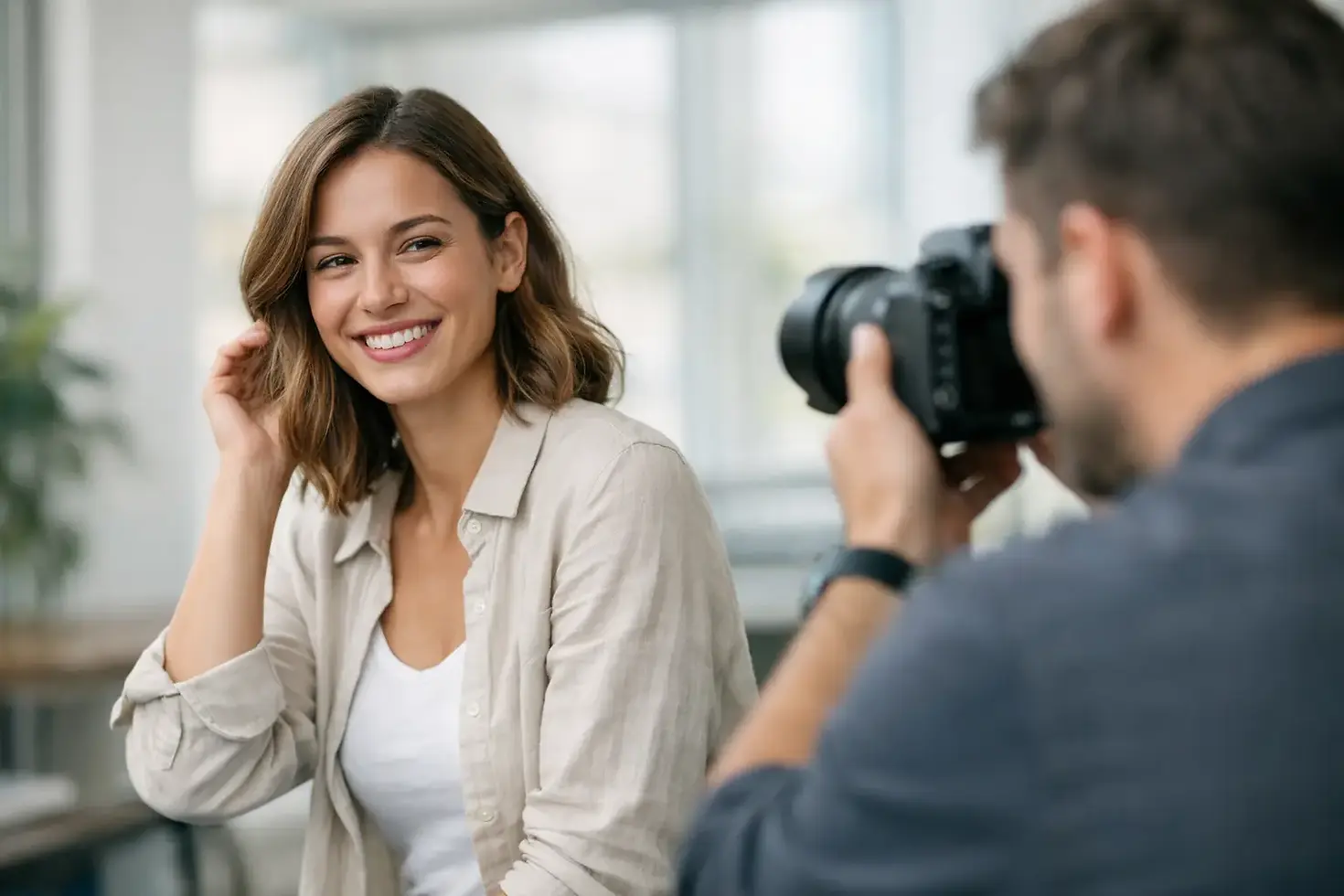
How to Feel Natural in Photos
- Stevon Barnett
- Jun 12
- 6 min read

Most couples are not worried about whether they can stand still and smile. They are worried about looking awkward, feeling exposed, and getting a gallery full of photos that look nice but do not feel like them. If you have ever wondered how to feel natural in photos, that fear usually has less to do with being photogenic and more to do with whether you actually feel safe, comfortable, and well-directed in the moment.
That distinction matters, especially for engagement sessions and weddings. On a day with real emotion, a real timeline, and real pressure, you do not need a performance coach. You need an experience that helps you settle into yourselves so the photos reflect your connection instead of your self-consciousness.
Why feeling natural in photos has very little to do with being "good at photos"
A lot of people assume some couples just have it. They know what to do with their hands, how to angle their faces, and how to smile without looking forced. Everyone else, supposedly, is left hoping for a miracle.
That is not how it works.
Most people who look relaxed in photos are not naturally camera-ready. They are responding to a setting that gives them something better to focus on than the lens. They have clear direction, enough breathing room, and a photographer who knows how to draw out connection instead of demanding stiff poses on command.
If your only experience with being photographed is school portraits, rushed family photos, or someone telling you to "act natural," of course it feels weird. That is not a you problem. It is usually a guidance problem.
How to feel natural in photos starts before the camera comes out
The biggest mistake couples make is thinking comfort starts at the session. It starts much earlier.
What you wear affects how you carry yourself. If you are adjusting a tight dress, pulling at a shirt collar, or wearing shoes you cannot walk in, your body will stay on alert. The same goes for hair, makeup, and accessories that make you feel unlike yourself. Looking polished is great. Feeling trapped inside the version of polished you chose is not.
Timing matters too. If you are running late, hungry, overheated, or trying to squeeze photos into a packed day without margin, your body knows it before your face does. Stress shows up fast on camera. Not because you are failing, but because people are not machines.
The location plays a role as well. Some couples relax in the middle of a city block. Others need space, quiet, and room to move. There is no morally superior backdrop. The better choice is the one where you can actually breathe.
This is one reason a thoughtful process matters so much. Good photos do not begin with a shutter click. They begin with planning decisions that lower the temperature in the room.
Stop trying to "pose naturally"
This is where a lot of bad advice starts.
If someone tells you to pose naturally, your brain usually hears, "Be casual on command while being watched." That is a fast track to tension. Natural photos rarely come from pretending the camera is not there. They come from doing simple things that create real body language.
Walking works because movement interrupts stiffness. So does talking, leaning in, brushing hair back, holding hands, or reacting to each other instead of freezing for the frame. Small actions give your body a job. Once your body has a job, your face usually follows.
That does not mean all direction is bad. It means the right direction feels more like guidance than choreography. You should not need to memorize a list of flattering angles. You should be led into moments that feel believable on your body.
There is also a trade-off here. Completely candid coverage sounds appealing, but many couples still need a little structure to get out of their heads. Too much posing feels stiff. Too little direction feels exposed. The sweet spot is a photographer who can read when you need prompting and when you need space.
Focus on your person, not your performance
One of the quickest ways to look uncomfortable is to monitor yourself the entire time.
Am I smiling weird? Is my arm doing something strange? Do I look tense? Is this flattering?
That kind of self-checking pulls you out of the moment and into evaluation mode. It makes your expression feel managed. The camera picks up on that.
A better approach is to redirect your attention toward your partner. Listen to their voice. Notice the way they laugh when something goes off-script. Let yourself react instead of trying to curate every expression. Couples do not usually want images that prove they can model. They want images that feel like them on their best, most present day.
This matters even more if one of you is more comfortable in front of the camera than the other. The less comfortable person does not need to "catch up." They need room to ease in at their own pace. Often, the strongest images happen after the pressure to get it right finally drops.
What actually helps you relax during a session
A calm session is rarely an accident. It usually comes from a few practical choices working together.
Start slower than you think you need to. The first ten to fifteen minutes can feel a little strange for almost everyone. That does not mean the session is failing. It means you are warming up. Give yourselves permission to need that transition.
Keep conversation going. Silence can make people feel like they are being evaluated. A photographer who communicates clearly, checks in often, and tells you what is working helps remove the guesswork. You should not be standing there wondering whether you look ridiculous.
Use prompts that create interaction rather than forcing expressions. Real laughter usually comes from an actual moment, not from being ordered to laugh. The same is true for tenderness. You cannot fake ease by demanding it harder.
And if something feels off, say so. Good direction is collaborative. If a pose feels unnatural, if your outfit is not working, or if you need a second to reset, that is useful information. Pushing through discomfort for the sake of efficiency usually shows up in the final gallery.
How to feel natural in photos on your wedding day
Wedding days bring a different kind of pressure because the camera is not just out for an hour. It is present throughout a day that already moves fast.
This is why trust matters more than hype. You need to know your photographer can give direction when needed, disappear when appropriate, and keep things moving without making the day feel like a content shoot. A wedding is not a branding session. If the photo experience takes over the day, the images may look polished but still feel disconnected from what the day actually was.
The timeline makes a huge difference here. If portraits are squeezed into an impossible window, even relaxed couples start to feel rushed. If family photos are disorganized, everyone feels it. If nobody has clearly communicated what is happening next, stress spreads fast. People often think they hate being photographed when they really hate being rushed and under-informed.
On a wedding day, natural images come from rhythm. Enough structure to create confidence. Enough flexibility to leave room for real moments. Enough communication that you are never guessing what is happening. That is part of the service, not an extra.
The photographer you choose changes everything
This is the part couples sometimes underestimate.
You can read all the tips in the world, pick the perfect outfit, and practice your smile in the mirror. If the person behind the camera gives vague direction, rushes through the experience, or makes you feel like another time slot on the calendar, it will be harder to relax. Comfort is not something couples are supposed to manufacture alone.
A strong photographer knows how to read energy, adapt in real time, and create an environment where you are not bracing for judgment. That includes practical professionalism just as much as creative skill. Clear communication, realistic planning, and consistent follow-through are not separate from the photos. They shape the photos.
That is a big part of why couples working with Stevon Barnett Photography are guided so intentionally through the process. When people know what to expect and feel taken care of, they stop trying to manage the experience themselves. That is often when the most honest images start showing up.
If you want to feel natural in photos, do not ask whether you know how to pose. Ask whether the experience around you is built to help you relax, connect, and stay present. Most people do not need to become more photogenic. They need less pressure and better guidance. That shift changes everything.


Comments